What a High Street Can Tell You About a Place
Read a high street with curiosity: notice its shops, shared spaces and everyday services, then use those clues to plan a more thoughtful UK short break.
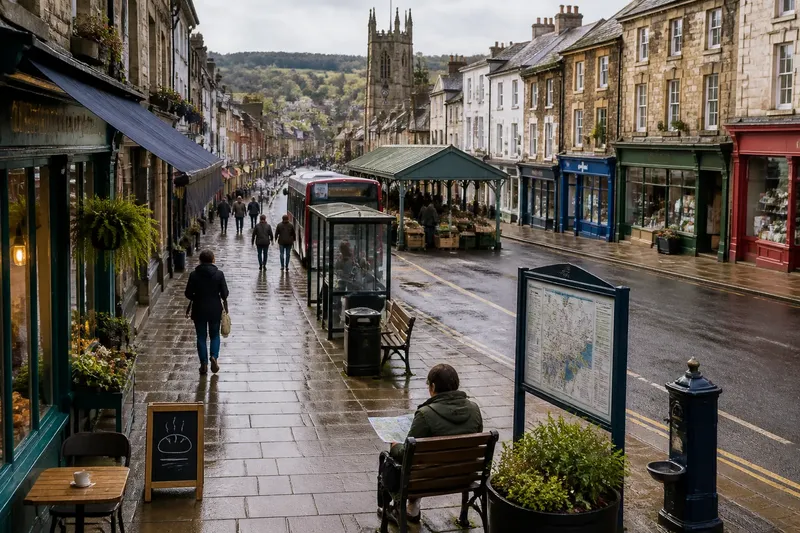
A high street can tell you how a town works on an ordinary day, not just what it wants visitors to see. For a weekend break, reading a high street means noticing who uses it, what people come to do and where the street connects to the rest of town—without mistaking one stretch of pavement for the whole place.
Where should you begin on a high street?
Start at an end that meets something else: a railway station, bus stop, market square or residential road. Pause long enough to see what lies behind the shopfronts as well as what faces you. A church tower, library entrance, covered passage or line of side streets can suggest how the centre fits into its surroundings.
Then walk at an unhurried pace, looking first rather than shopping. Notice the change from one block to the next: a busy cluster of cafés may give way to a parade of useful services, then to quieter streets. That variation is information, not a verdict on whether the town is lively or dull.
What do the shopfronts reveal?
Look at the mix of businesses and the jobs they help people get done. A chemist, bakery, charity shop, phone-repair counter and estate agent point to different everyday needs; independent names alongside familiar chains tell you something about the street’s character, but neither arrangement tells the whole story.
Pay attention to how people use the entrances. Are customers carrying groceries, stopping for a chat, collecting parcels or sitting with a coffee? A shop’s display can address visitors, while its busy counter may serve local routines. Both observations matter, and neither needs to be turned into a ranking.
Also notice empty premises, temporary signs and upper floors. A vacant unit might be between uses, while a flat above a shop suggests the street is also someone’s home. Treat these as clues to explore gently, not as proof of decline or renewal.
How do you read the spaces between shops?
Check where people can pause without buying anything. Benches, a market shelter, a small green, a library foyer or a churchyard can show how the town makes room for meeting and resting. Look for practical details such as shade, sheltered seating, bins and whether the space is easy to reach from the pavement.
Listen and watch, while giving other people their privacy. A queue outside a café, a delivery trolley crossing the street or children heading towards a bus stop can reveal the rhythms of the place. You do not need to photograph strangers or record conversations; a few quiet observations are enough to shape your impression.
Notice how the street feels to move through. Dropped kerbs, crossings, pavement width and traffic noise affect who can comfortably use it. If a route feels awkward, look for a parallel street or a nearby public space rather than assuming the whole town is difficult to explore.
Which everyday services matter to visitors?
For a short break, everyday services often make a place easier to understand and enjoy. Find the public toilets, public transport stops, cashpoint, supermarket or convenience shop, and somewhere to refill a water bottle if available. A library or visitor information point may have a local map, noticeboard or staff who can point you towards a nearby neighbourhood.
Check opening hours before building your plans around a particular stop, especially on Sundays or public holidays. A closed shop is not a reliable sign of what the town is usually like. If a useful service is elsewhere, note the direction and how you would get there rather than judging the centre by its absence.
Say you arrive in an invented market town on a wet Saturday and find that its busiest street has a bakery, a bus stop and a small covered market. You could buy something warm, check the market noticeboard for a local event, then follow a side street to the library instead of assuming the high street is the only place to spend time. The observable result is a plan shaped by what is actually available, with room to see another part of town.
How can you check whether the high street tells the whole story?
Step away from the main stretch before settling on an impression. Follow a public route towards the river, station, park or residential streets, and look for signs that the town’s daily life continues beyond the shops. A short detour can reveal a community centre, waterfront path or housing area that the central strip cannot represent.
Compare what you noticed with a local map or council information board. The map can clarify where a street leads; it cannot tell you how the place feels at different times or what local people value. Keep your reading provisional: you have encountered one setting, at one moment.
What should you look for when reading a high street?
How do I tell whether a street serves residents or visitors?
Look for both visitor-facing businesses and practical services, then notice who appears to use them. Many high streets serve residents and visitors at once, so a single shop or busy café is not enough to decide.
What can empty shops tell me?
They tell you that particular premises are not trading at the moment you pass. They do not, on their own, explain why, how long the situation has lasted or what the rest of the town is like.
Should I plan my whole visit around the high street?
Use it as a starting point for finding food, services and routes, then add a nearby place that interests you. Checking a map and opening hours can help you avoid making the central strip your only option.
How can I observe without being intrusive?
Notice public features such as shop signs, seating and movement, and keep people out of close-up photographs unless they have agreed. If you want local context, ask a shopkeeper or information staff a simple, respectful question when they are not busy.
How do you turn your observations into a better short break?
Choose one or two clues that genuinely interest you, then make a light plan around them. If the market is active, check when it runs; if the street opens towards a river, find a public path; if a library or gallery catches your eye, check its visiting information. Let the place suggest a useful next move instead of trying to collect every sight.
Keep the distinction between observation and assumption clear. You can say, “There are several places to sit near the centre,” without deciding that everyone feels welcome there. That kind of careful reading helps you enjoy a town while leaving room for what you have not seen.
A high street is most useful as a set of clues: what people need, where they gather and how the centre connects outward. Read it that way, and your next weekend plan can begin with a real sense of the place rather than a snap judgement from one street.