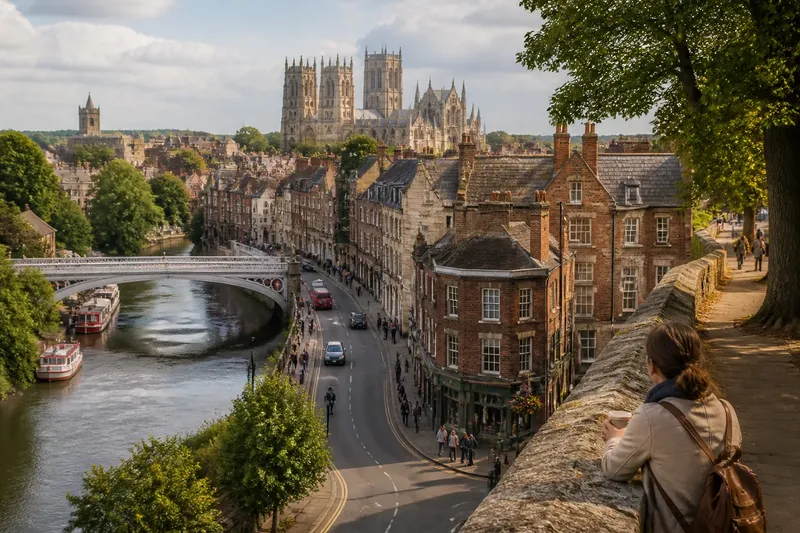
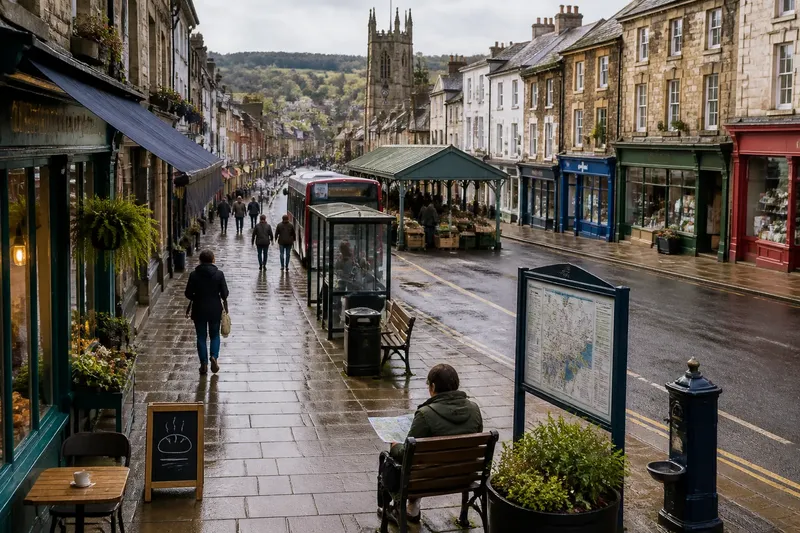
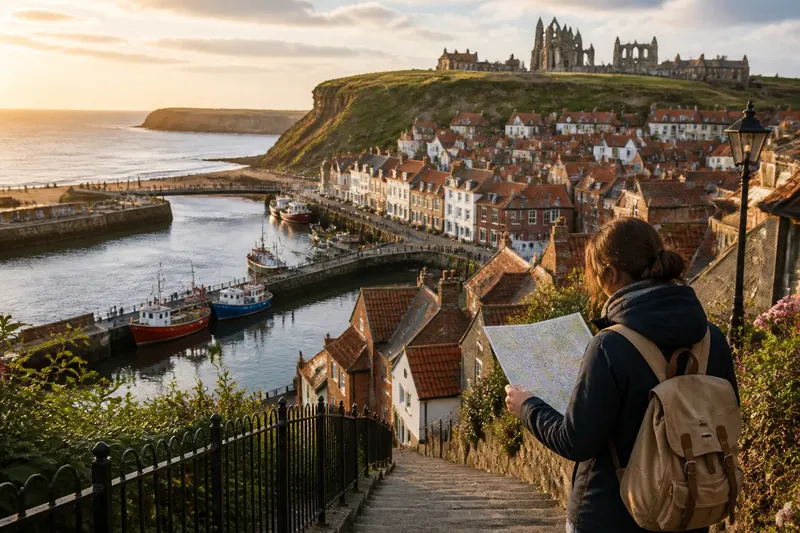
Rail Line or Circular Walk? Two Shapes for a Day Out
Rail line or circular walk? Compare return options, effort and the feel of progress to choose a day out that suits your time, energy and plans.
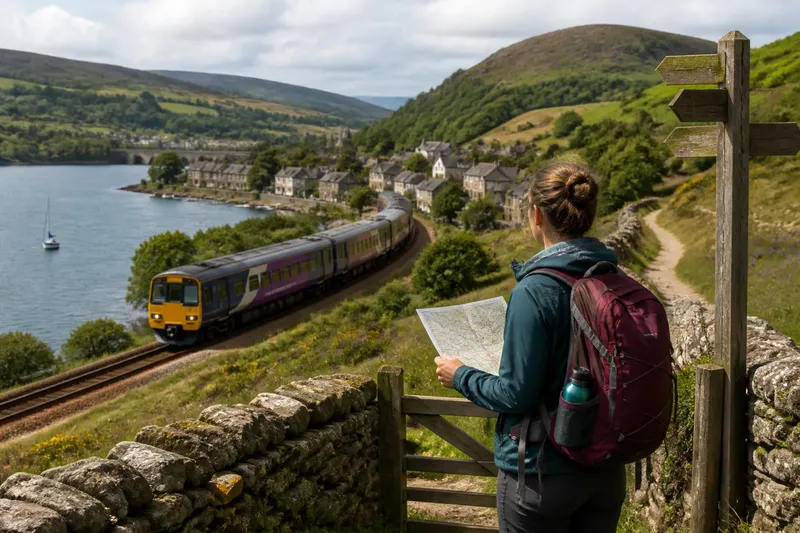
A rail-line outing gives a day a clear direction; a circular walk brings you back to where you began. That difference shapes more than the route: it changes how you handle tired legs, missed connections, weather and the small pleasure of seeing a landscape unfold.
For a short break in the UK, these are two useful ways to make a day feel purposeful without filling every hour. A third option—a rail journey paired with a loop walk—can combine their strengths, but it asks for a little more attention to timetables and starting points.
What does each shape make possible?
On a point-to-point rail outing, the train carries you between places while the walk happens along the way. You might travel out to a station, explore on foot, then continue by rail to another town or village. The line itself supplies a sense of forward movement: each stop can feel like a new chapter rather than a return to the previous one.
A circular walk is simpler to picture. You set off from a station, car park or village centre, follow a route that bends through the surrounding countryside, and finish near your starting point. There is a satisfying sense of completion, and you do not need to arrange a separate lift or check which train leaves from a different station.
Neither shape is automatically more adventurous. A rail outing can be a gentle sequence of short walks and café stops, while a loop can cross exposed moorland or steep ground. The route’s surface, climbs, facilities and transport links matter more than the shape on a map.
When does a rail-line outing suit you?
Choose the point-to-point shape when the places along a railway are part of the appeal. A branch line may link a harbour, a market town and a station with a riverside path; travelling between them lets you sample several settings without walking the full distance between each one.
It also suits a group whose energy may change during the day. If one person wants a longer wander and another would rather browse near the station, you can agree on a later train and meet at the next stop. That flexibility depends on the service, so check the timetable before treating a station as an easy exit.
The trade-off is that a missed train can alter the whole sequence. Rural services may be infrequent, and a station can sit a fair walk from the place you hoped to visit. Check the operator’s journey planner or National Rail for planned services and disruptions, then look at the local map to understand the walk between platform, village and trail.
For a one-way walk between stations, check the route on an Ordnance Survey map or a trusted walking app. Make sure it follows public paths, note where it crosses roads, and identify a shorter alternative if the weather turns. A line on a screen is not the same as a surfaced path or an easy crossing.
Why choose a circular walking route?
A loop makes the day easier to organise when you want to leave the timetable in the background. You can start from a village, a country park or a station with a suitable route nearby, then choose a pace without needing to reach another platform by a particular time.
Circles also suit people who enjoy noticing how a place changes as they move through it. A route might leave a village lane for a wooded path, rise to a ridge and return beside a stream. Familiar landmarks on the way back offer a quiet sense of progress: you are not retracing the whole day, but you can see how the landscape connects.
The main limitation is that the finish remains tied to the start. If the walk feels longer than expected, you may still need to complete the loop or arrange another way back. Before setting out, look for sensible shortenings, such as a public path that returns through the village, and check that any alternative is genuinely accessible and permitted.
For a loop beginning at a station, check the first and last useful trains as well as the walk itself. A route that looks circular may start several miles from the platform, or finish in a place with limited onward transport. An online map can help you inspect the connection; local visitor information may clarify path conditions and access.
Could you combine rail and a loop?
A rail journey followed by a circular walk can work well when you want a change of scenery but prefer to finish where you began walking. Take the train to a village or small town, follow a signed loop from the station, then return by train. This keeps the walking route self-contained while making the journey there part of the day.
Imagine you are staying in a coastal town and want to spend the afternoon inland. You check that a nearby station has a suitable train, choose a published loop that starts within walking distance, and save an earlier return service as an alternative. If the walk takes longer than expected, you can shorten it using a mapped public path or skip a café stop; the observable result is a day that still ends at the same station, with less pressure to reach a separate finishing point.
This combined shape is not a shortcut around planning. If the railway is disrupted, the walking route may no longer fit the day, and the last convenient train can become a hard boundary. Keep the route flexible, but be clear about the point at which you would turn back.
Which shape fits your day?
- Choose a point-to-point rail outing if you want to visit several places and enjoy the feeling of moving onwards.
- Choose a circular walk if you want one continuous route and a finish near your starting point.
- Combine rail with a loop if you want a change of base but prefer not to end the walk at a different station.
- Lean towards the simpler transport plan if services are sparse or you would rather not organise a connection.
- Choose by the walking route, not its outline if steep climbs, muddy ground or uneven paths will affect your comfort.
Say you have a free day, a forecast that may bring showers, and a train line serving two places you would like to see. If you are happy to keep an eye on service times, the rail outing lets you adjust how long you spend at each stop. If you would rather carry one map and follow a route that returns to the same village, choose the loop and make the journey there secondary.
How do you choose a route for your day out?
Is a circular walk easier than a point-to-point route?
It is often easier to organise because you return to your starting area, but the walking can still be strenuous. Compare climbs, ground conditions and the distance to the start with your group’s comfort, rather than assuming a loop is gentle.
What should you check before planning a rail-line outing?
Check the day’s train services, the location of each station and the time needed to reach the places you want to visit. Look for disruption information and identify a realistic return option before setting off.
Can you walk between two railway stations?
Yes, if there is a suitable public route connecting them. Use a detailed map to check path access, road crossings, terrain and how far each station sits from the walk’s actual start and finish.
Which route shape works best in changeable weather?
There is no single best shape: a loop may offer a straightforward return, while a rail outing may give you a way to stop walking sooner if services allow. Choose based on sheltered alternatives, transport availability and how easily you can shorten the plan.
What makes the decision feel right?
Start with the ending you want. If you would like to arrive somewhere new and let the railway carry you onward, build the day around a line and its stops. If you want the walk itself to hold the day together, choose a loop that begins and finishes in a convenient place.
Then check the practical details that shape that preference: the train service, path access, terrain, daylight and where you can pause. The best rail line or circular walk is not the one with the most stops or the neatest shape on a map. It is the one whose return plan still feels workable when you are ready to head home.